Active Lifestyle
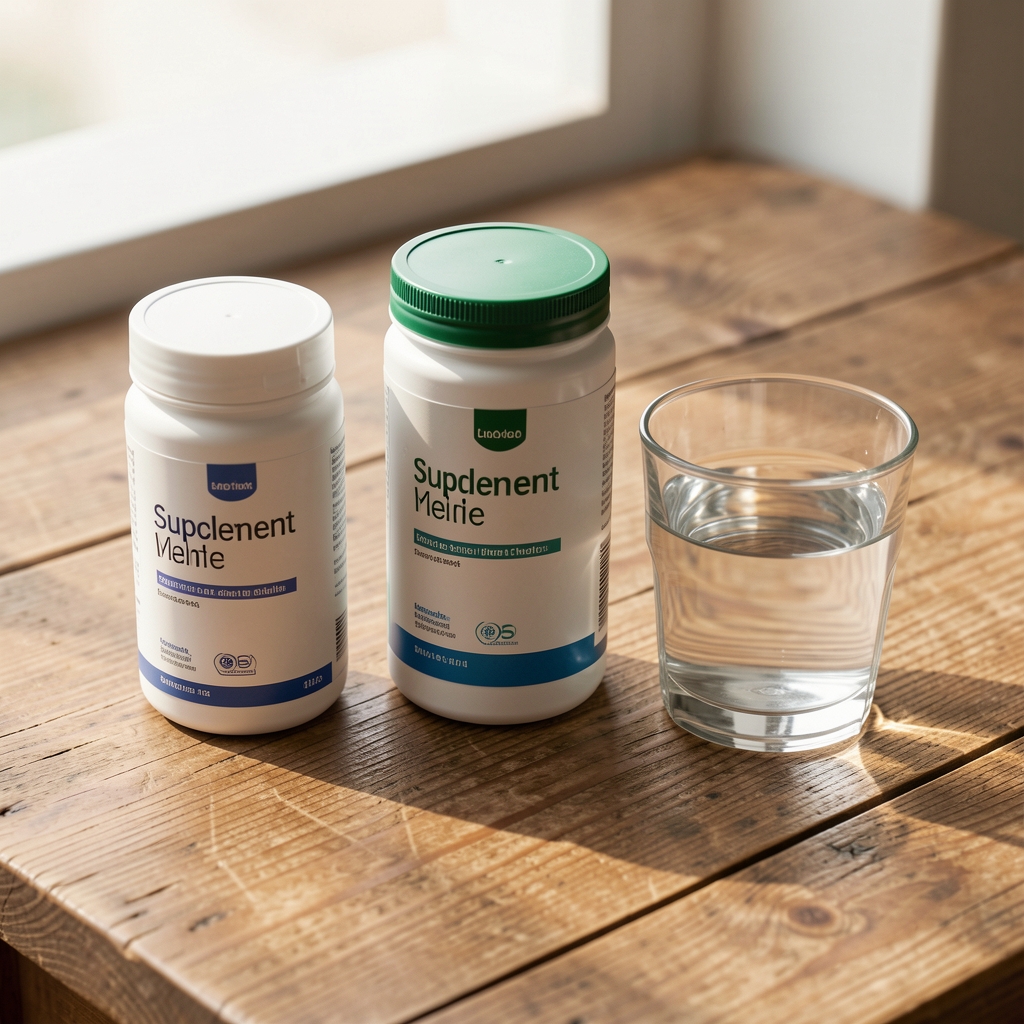
The question of which two supplements, taken together, would represent the most productive starting point for an active man's daily stack is one the editorial desk has returned to repeatedly. The answer, drawn from published nutritional research and several months of observational note-taking, returns consistently to the same pair: vitamin D and magnesium.
Vitamin D occupies a particular position among the daily vitamins for men: it is simultaneously one of the most commonly cited in published nutritional research and one of the most frequently absent from active men's diets. The explanation is straightforward enough — the primary natural source is sunlight, and the patterns of indoor work that characterise modern active men's routines tend to reduce consistent sun exposure to levels insufficient for daily nutritional balance.
What the published literature observes is that vitamin D contributes to daily energy rhythm and overall nutritional balance. The editorial position here is not to overstate the case — the research is observational and the population studied varies widely — but to note that vitamin D appears, across several published nutritional surveys of active men in Northern Hemisphere populations, as consistently present in those whose self-reported energy awareness holds steady across seasons.
For men building a daily supplement routine from scratch, vitamin D is the place most editorial sources and published nutritional frameworks agree is worth considering first. The practical question then becomes: at what point in the day, and in what form.

Magnesium's role in active men's supplement routines tends to be introduced through the lens of muscle recovery rhythm after physical activity. The observation that is most consistently documented in published nutritional research is that magnesium contributes to the regulation of muscle function following resistance-based exercise — not in the sense of producing dramatic changes in output, but in the sense of supporting the body's ordinary recovery processes in a way that is consistent over time.
The editorial note here is about framing. Magnesium is not the most commercially prominent entry in the men's supplement stack conversation — it lacks the visibility of protein or creatine — but it appears in the supplement habits of the active men the journal has documented with a frequency that suggests its value is arriving gradually through word-of-mouth rather than marketing. That pattern tends to indicate durability rather than trend.
Men who document their gym nutrition habits and pay attention to their recovery patterns tend to introduce magnesium after a period of observing that their recovery rhythm after resistance sessions is uneven. The logic is not complicated: magnesium supports muscle recovery rhythm after physical activity, and most active men in regular resistance training consume insufficient amounts through diet alone.
"The pairing of vitamin D and magnesium in active men's routines is less a designed protocol and more a pattern the editorial desk has observed forming independently across multiple documented stacks."
The more interesting observation is not about either nutrient in isolation but about the pattern of their co-occurrence in men's supplement stacking habits. When the journal reviewed the documented daily supplement routines of active men across its readership over the first quarter of 2026, vitamin D and magnesium appeared together in the routine more often than any other pair. The nearest competitor was vitamin D and omega-3, which appeared together at a slightly lower rate.
The published nutritional literature offers a partial explanation for this co-occurrence: magnesium is involved in the metabolic processing of vitamin D at the cellular level, meaning that men who are supplementing with vitamin D and not also attentive to their magnesium intake may find the full nutritional benefit of the vitamin D routine is not realised. This is not a independent claim — the editorial position is to report the observation as documented, not to prescribe a stack.
What the observation suggests, for a man building his first structured daily supplement routine, is that vitamin D and magnesium represent a working pair: each supports the other's nutritional context in a way that is consistent with published nutritional research and consistent with the habits the journal has documented among active men who self-report stable energy awareness and recovery rhythm.
The practical structure of a vitamin D and magnesium daily supplement routine is worth describing in the terms the journal has observed most commonly among active men. Vitamin D, being fat-soluble, is most often taken with the first meal of the day — typically breakfast, where the presence of dietary fat supports its absorption. The form that appears most consistently in the documented stacks is a softgel containing vitamin D3, which is the form most referenced in current published nutritional research.
Magnesium presents a slightly more varied picture. The form most commonly observed in documented active men's stacks is magnesium glycinate — a chelated form that appears in published research as well-tolerated and effective at supporting the mineral's contributions to muscle recovery rhythm. Magnesium citrate is also common; both appear to deliver the nutritional contribution the active men in the journal's documented pool report. The timing observed most consistently is evening, taken in the hour before sleep.
This morning-and-evening structure — vitamin D with breakfast, magnesium in the evening — represents the most commonly documented pattern in the journal's observation of men's daily supplement routines and aligns with the general approach described in published nutritional frameworks. It also has the practical advantage of separating the two nutrients by meal context, which reflects the different timing preferences that have emerged independently across documented stacks.
The vitamin D and magnesium pairing is, for Atorev Journal, a representative example of what the editorial approach to men's supplement stacking looks like in practice. It is not a prescriptive protocol — it is an observation drawn from documented habits and cross-referenced with published nutritional research. The editorial aim is not to direct but to describe: to give active men a detailed, honest account of what their peers are doing and what the available evidence observes about those choices.
The significance of this particular pairing extends beyond its individual components. It represents the point at which many active men's supplement routines begin: a small, manageable, evidence-informed addition to an existing daily pattern. From that foundation, the supplement stacking habits the journal documents tend to evolve gradually — adding omega-3, then zinc, then creatine as routine and awareness develop. But the working pair of vitamin D and magnesium appears, consistently, as where it starts.
The journal will return to this topic — specifically to the question of how the vitamin D and magnesium foundation interacts with the addition of a third nutrient in a men's daily supplement stack — in a future issue. In the meantime, the observational record stands: for active men building a daily supplement routine from the ground up, this pair is where the documented evidence and the observed habits align most clearly.

Marcus Chen is the founding editor of Atorev Journal, based in Jakarta. He has spent the past four years documenting men's supplementation habits and nutritional awareness through an independent editorial lens, drawing on published nutritional research and field observation.
More from this author →